
Designing a Life You Love: Applying Design Thinking to Personal Development
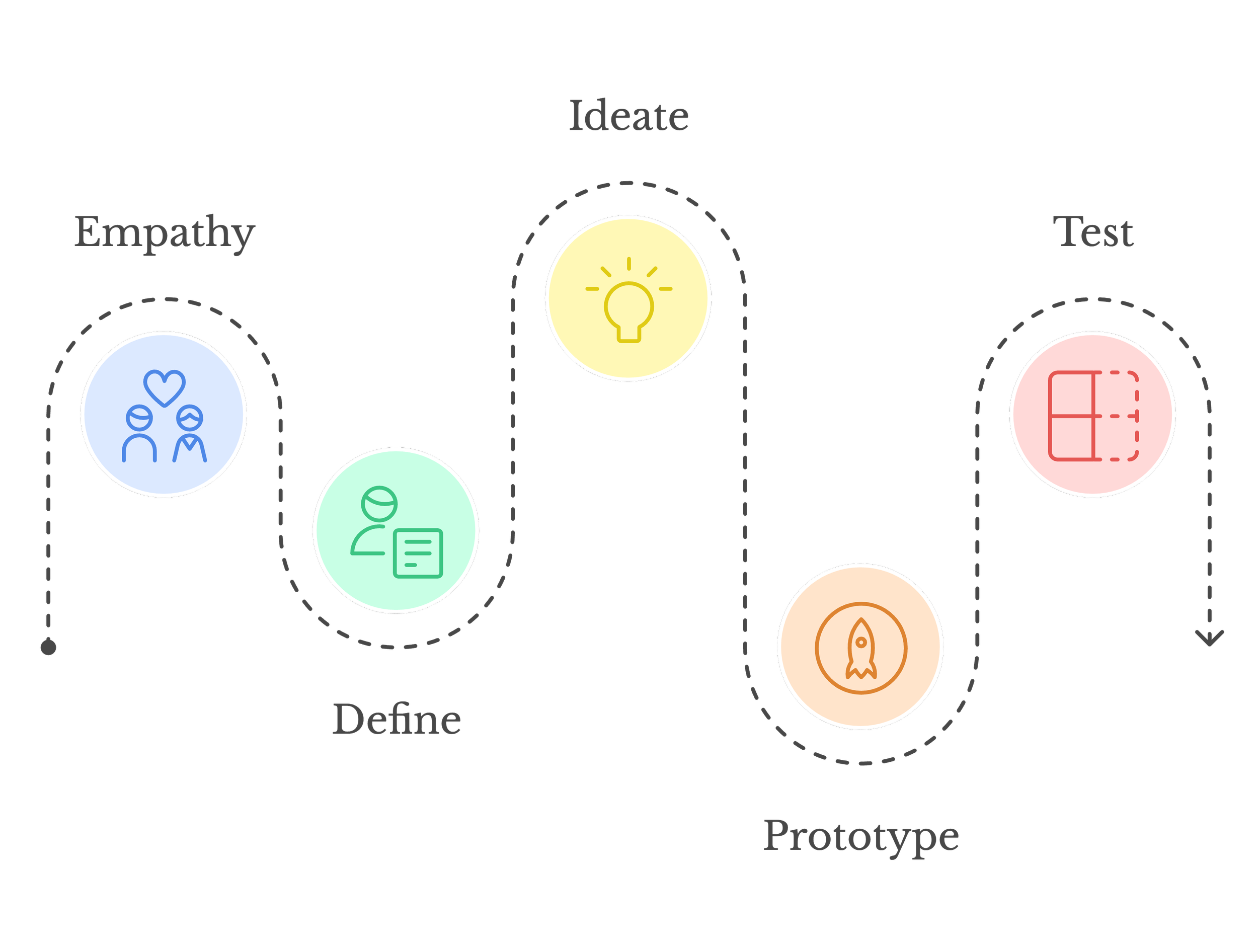
Design thinking is a powerful problem-solving methodology that is widely used in product design, but it can also be applied to personal development. By applying design thinking principles to our personal lives, we can identify areas for growth, set goals, and develop actionable plans to achieve them. In this blog post, we'll explore how you can use design thinking to design a life you love.
Empathy:
Understanding Your Needs and Goals
The first step in using design thinking for personal development is to practice empathy. This involves understanding your own needs and goals, as well as those of the people around you. By taking the time to empathize with yourself and others, you can identify areas of your life that are causing you stress or unhappiness, and set goals that align with your values.
Define:
Identifying Your Problem Statement
Once you have a better understanding of your needs and goals, the next step is to define your problem statement. This involves clearly articulating the specific challenges or problems you want to solve. For example, your problem statement might be "I want to improve my work-life balance" or "I want to find more meaning and purpose in my career."
Ideate:
Brainstorming Solutions
With a clear problem statement in mind, it's time to start ideating solutions. This involves generating as many ideas as possible, without worrying about their feasibility or practicality. Brainstorming techniques like mind mapping or ideation sessions with friends or colleagues can be helpful for this step. The goal is to generate a wide range of ideas and approaches that could potentially help you achieve your goals.
Prototype:
Experimenting with Different Approaches
Once you have a list of potential solutions, it's time to start prototyping. In the context of personal development, this might involve experimenting with different approaches to see what works best for you. For example, if you're looking to improve your work-life balance, you might experiment with different scheduling techniques or time-management strategies to see what helps you feel more productive and fulfilled.
Test:
Reflecting and Iterating
The final step in the design thinking process is testing. This involves reflecting on your progress, evaluating what's working and what's not, and making adjustments as needed. By testing and iterating, you can continue to refine your approach and make progress towards your goals.
In conclusion, applying design thinking to personal development can be a powerful tool for designing a life you love. By practicing empathy, defining your problem statement, ideating solutions, prototyping, and testing, you can develop actionable plans that align with your values and help you achieve your goals. So why not give it a try? Who knows, you might just design a life that exceeds your wildest dreams.