
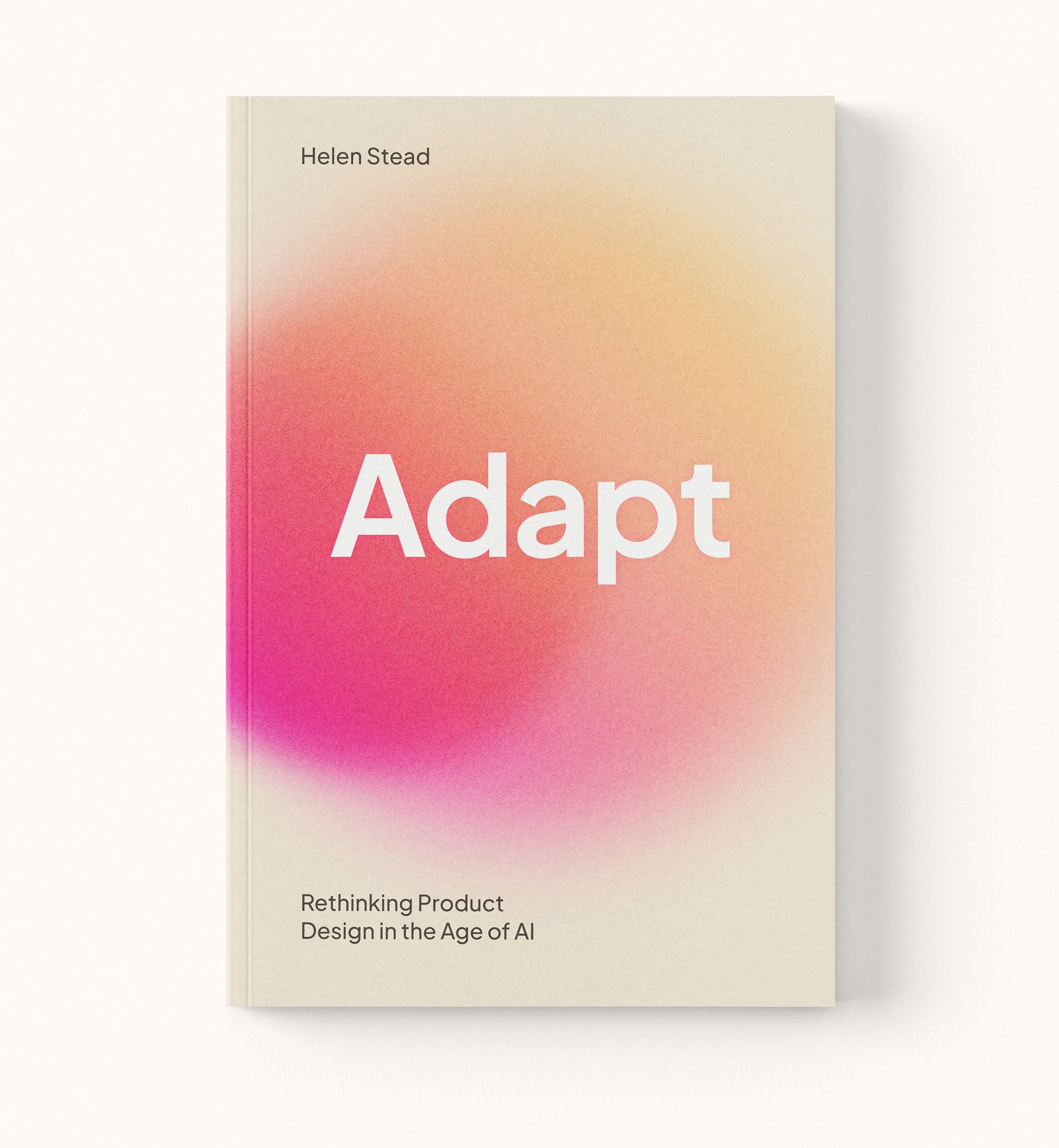
Adapt: How to Think Big, Adapt Fast, and Design for Intelligent Systems – Coming Soon
AI is changing product design faster than most of us ever expected. What used to take weeks to do research synthesis, ideation, ux copywriting and prototyping can now happen in minutes. It’s exhilarating, but also unsettling.
Where does that leave designers? How do we evolve when the tools are evolving just as fast?
This book is my answer.
Over the past decade, I’ve worked in startups, scale-ups, and hypergrowth environments, designing everything from headless CMS platforms to AI-native products. I’ve seen firsthand how AI is reshaping not just workflows, but the role of the designer itself. The old and trusty playbook of Lean UX, Design Thinking, Continuous Discovery etc., wasn’t built for this new era of speed, automation, and intelligent systems.
Adapt is a personal framework for navigating that shift. It helps designers rethink their ways of working, discover AI-native patterns, and augment their roles to make better, faster decisions. It’s built around five key principles:
Agency – Redefine your role in the age of AI. Take control of your work, push ideas forward, and learn to lead instead of waiting for direction.
Distill – Turn noise into clarity. Use AI to cut through the flood of research, feedback, and data, so you can make faster, smarter decisions.
Aim & Architect – Learn how to design a flexible, bold vision and see examples of how AI native companies are architecting their UX.
PoC & Pivot – Validate, iterate, and move, fast. Test ideas in hours, not weeks. Build smarter proofs of concept and pivot before it’s too late.
Triage & Tune – Spot the best opportunities and refine relentlessly. Learn when to push forward, when to cut your losses, and how to fine-tune for maximum impact.
This book is for designers who don’t just want to react to the new world, but take part in shaping it.
I’m excited to announce the launch soon, but for those who want early access, you can submit your details below. 💙