Eventbrite Live
Designing a live video streaming platform for online events
Context
Eventbrite Studio was an R&D project born out of a need to support online events for our creators. It became one of the companies leading strategic priorities for 2020. I worked as the sole, lead designer with a group of engineers and a product manager.
Design methodology
Given the time constraints to launch a competitive product into the market, we had to work in a lean environment and I decided to adopt a few key methodologies to help us iterate quickly.
Ideation sessions with the team (1 x sprint) to tackle ongoing design/dev challenges.
Design office hours (1 x week) to share work in progress and align on key decisions.
User interviews (1 per week)
Design roadmap with key milestones and targets to hit
Regular lightning talks to inform the team of research and hear from experts. (1 x sprint)
Co-creation and feedback sessions with selected users
Starting with data & learning about our user's needs
Online events grew by 2000% between March and April 2020
Over 1,000,000 online events hosted between March - August 2020
75% of First Paid Publishes are now online events
52% of Paid tickets for online events that are classes, training events or workshops
26k ‘Super Creators’ who have transitioned to hosting online events
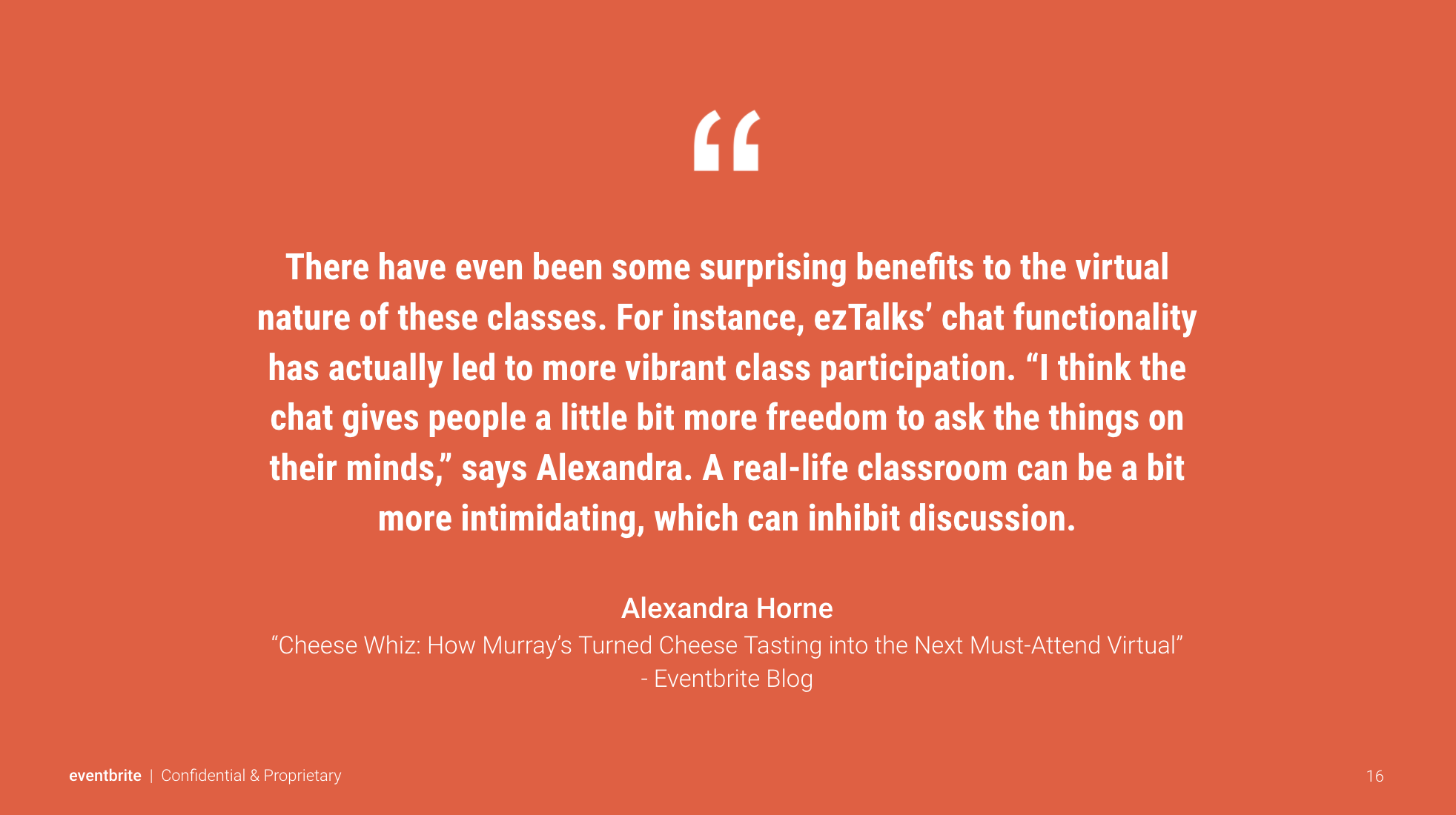
User interviews and quotes:
We did a number of customer interviews, to learn about their experience with the current tools in the market, how they felt online events had impacted their business and what they would like to see in a new tool.

Customer pain points & Opportunities
Our 'super creators’ are trying to cobble together multiple platforms that are not connected to each other, resulting in inefficiencies, higher bills and a poor overall attendee user journey.
It’s hard to gate access to a live stream with the tools currently available in the market. Our biggest competitor in this area is Zoom and Paypal as a joint tool, but both are not well suited to the online events space.
The tools available now are limiting as they are set up for webinars, or one way streaming. Most of our active users need tools to support workshops and classes, music shows etc.
Introducing Adriene, one of our creators
Adriene is a sculptor who hosts monthly in-person workshops for her local community.
She wants to start hosting online workshops on an interactive platform where she can split her students into groups and provide individual feedback.
Leaning into our customer personas, we landed on a few user stories for our MVP:
As a Creator, I need:
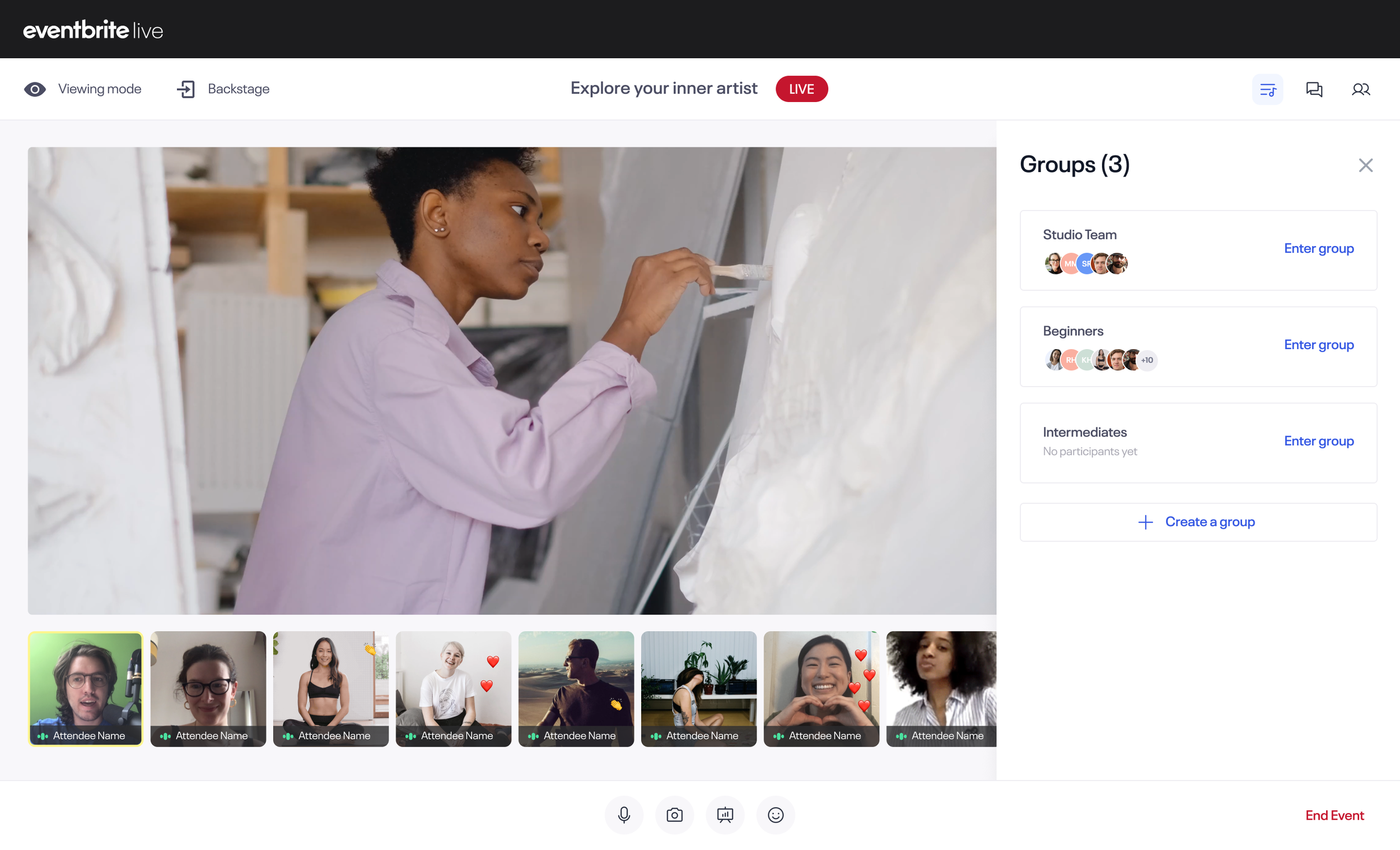
a solution that allows for people to join in groups and have multiple viewing layouts
a "waiting room", and a post-event experience that allows attendees to leave a review
an event schedule that I can control to show specific video content or overlays
As an Attendee, I need:
an easy way to find, buy tickets and access an online event
a way to attend online events within a friendship group or in a private room
Lean UX Workshop
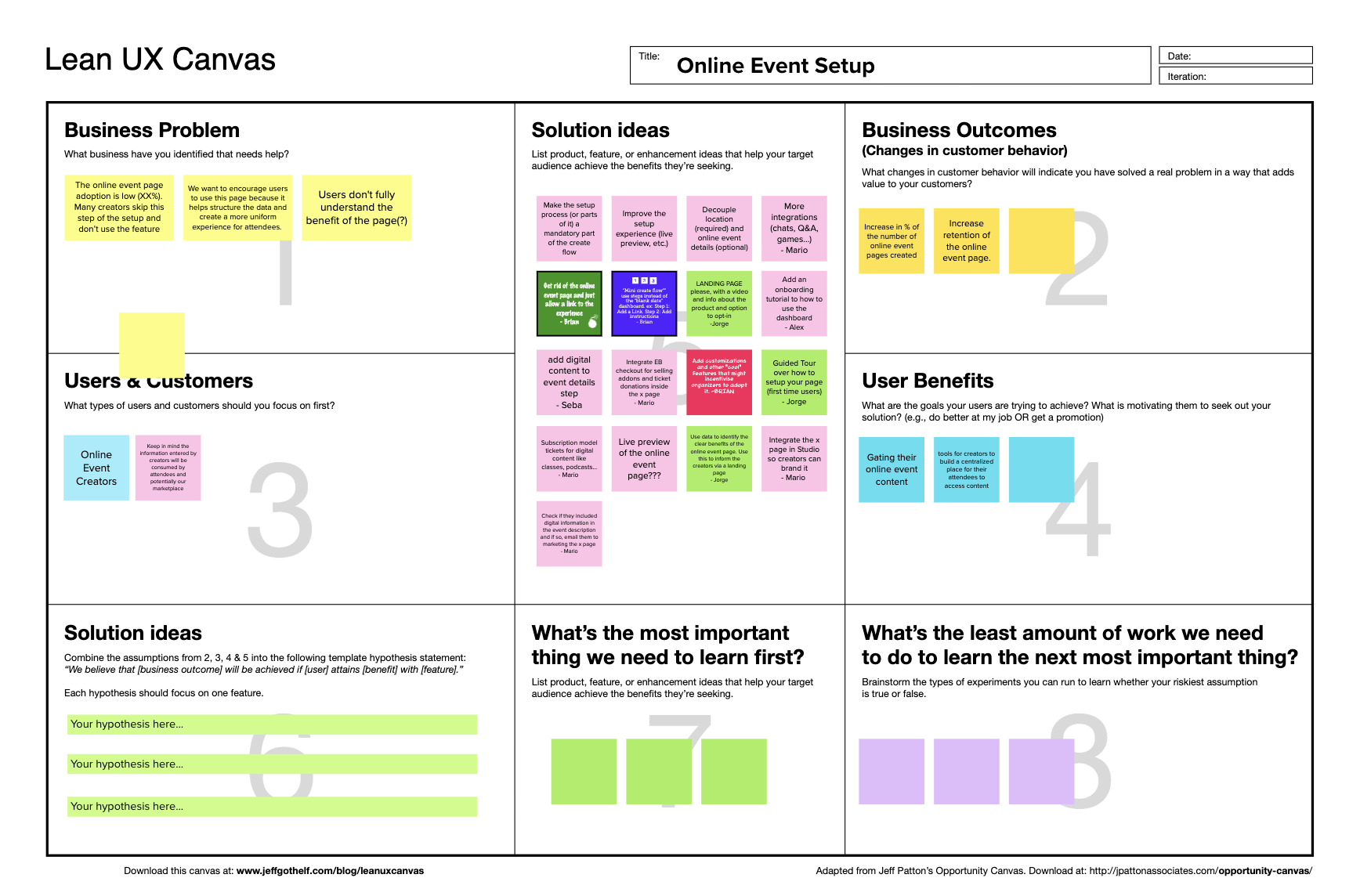
I led the team through an interactive ideation session where we used a lean UX canvas to help us align on the problem areas, business outcomes and possible solutions. We used this as a starting point for developing wireframes and user stories.
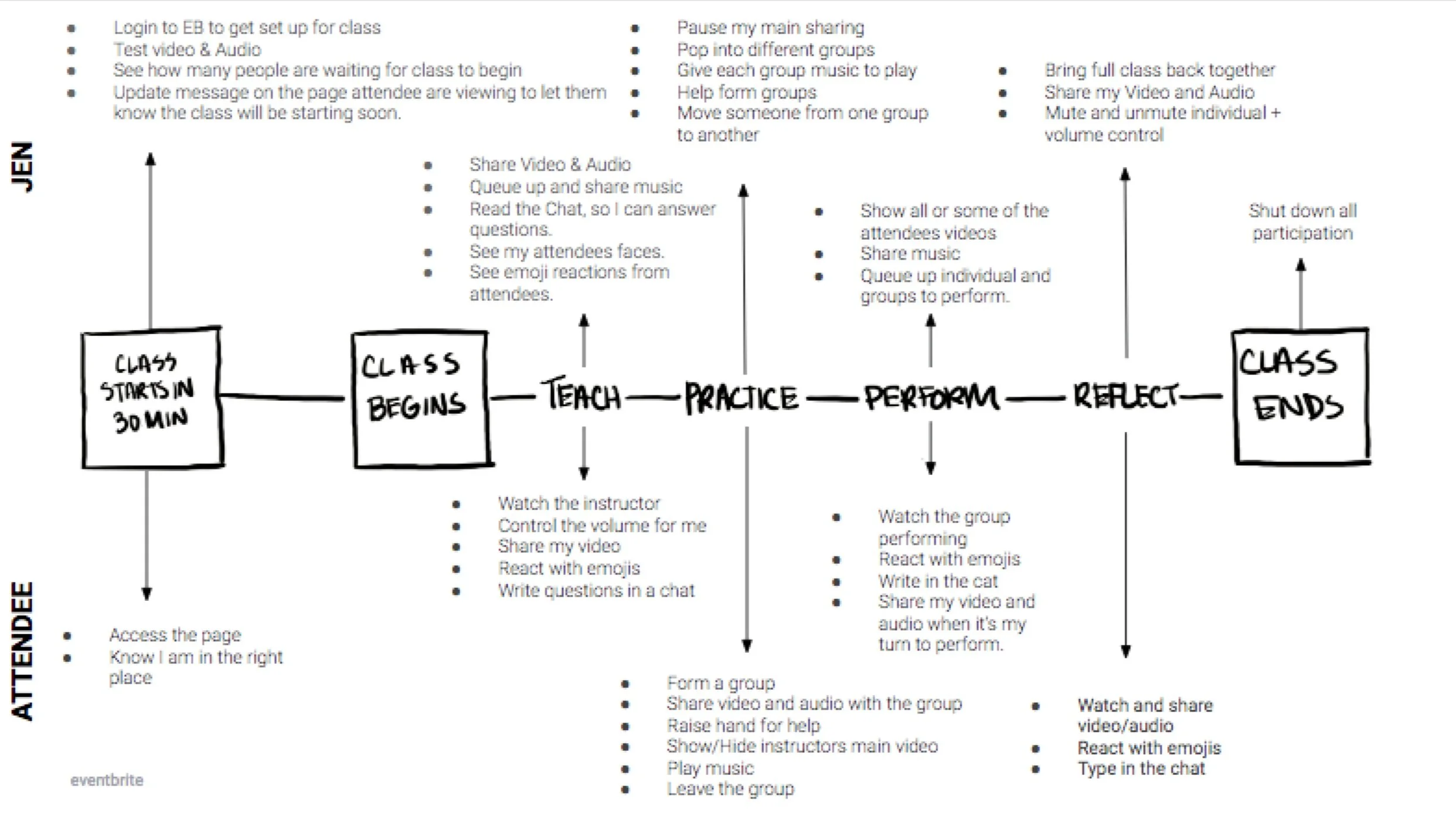
Example user journey
We co-created this user flow with one of our event creators who helped us understand the format of one of her recurring classes. This would help inform the user story priorities and identify core needs.
Wireframes & Information Architecture
When designing the initial wireframes I was informed by our research and competitive analysis and wanted to explore new ideas of how people could create and attend online events.
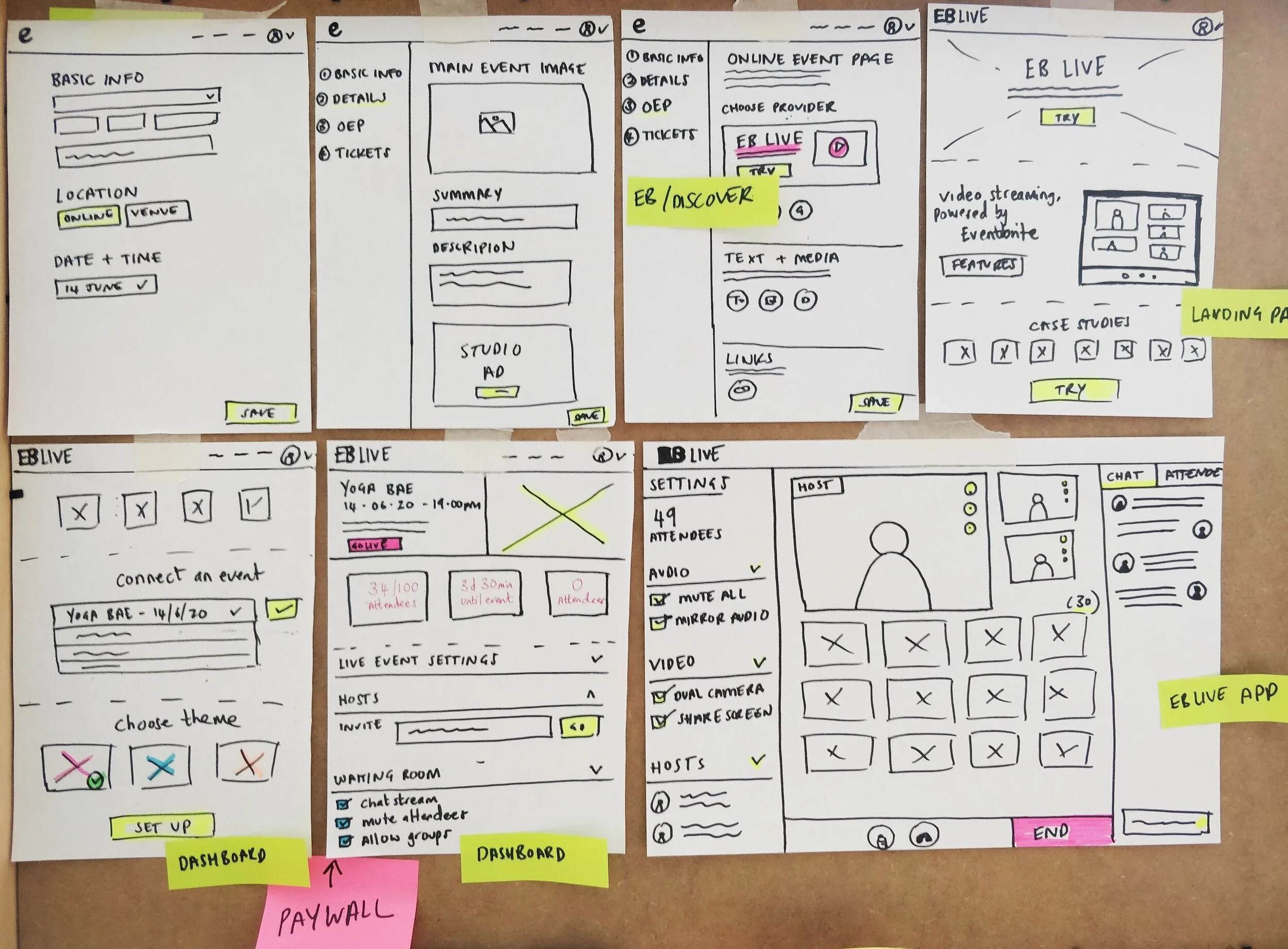

Exploring ways a creator could discover and activate Eventbrite Live in the core product
Remote ideation workshop
It was important for me to involve the engineers and other stakeholders in the design process so I facilitated a 2 hour ideation workshop where each person could brainstorm and share their ideas. Since all of our team members are remote, we used Whimsical to create basic wireframes which the team later voted on.
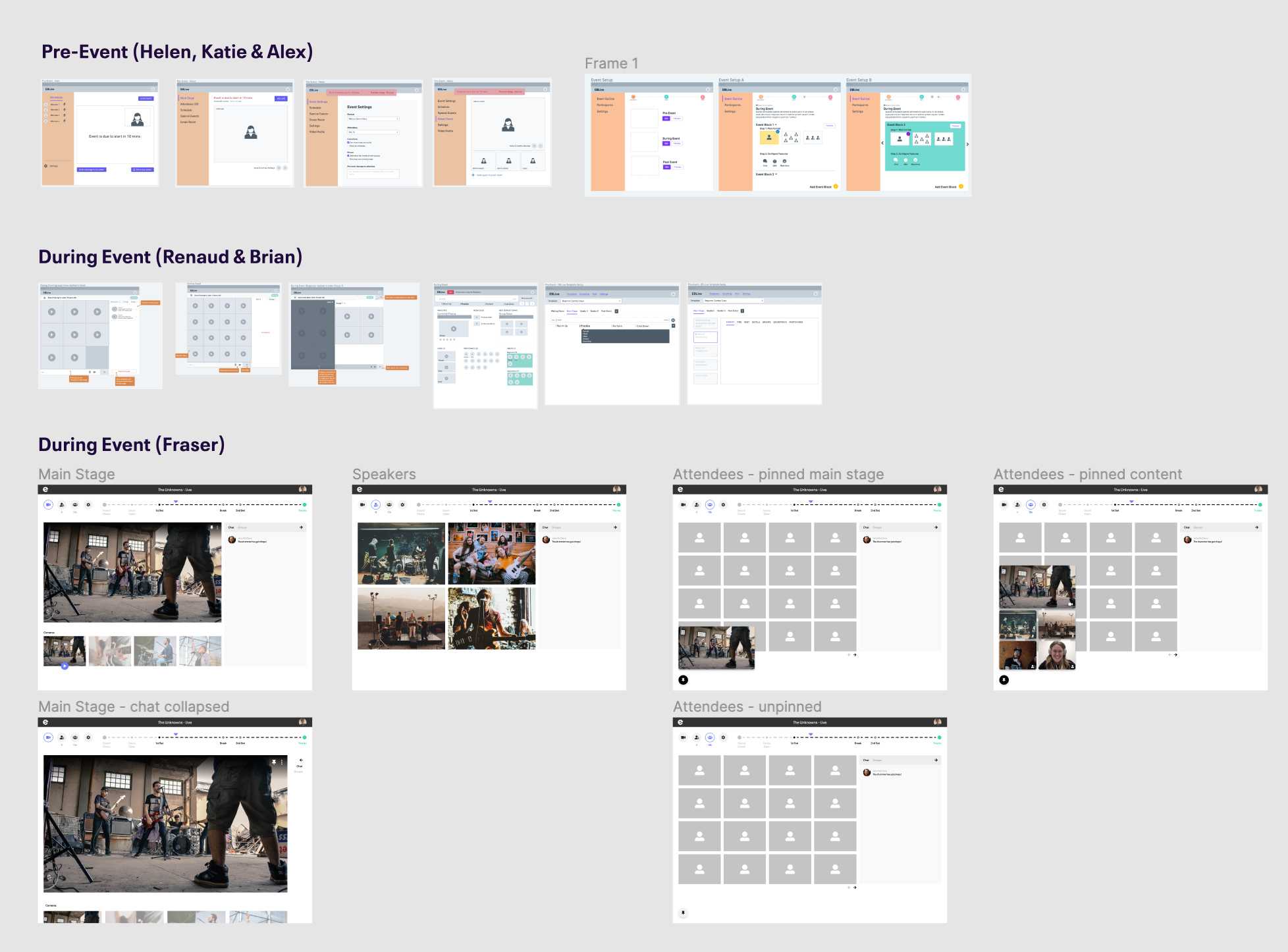
Designing the attendee event experience
After numerous user interviews and competitive assessment I worked with the PM to identify the following core features for the initial MVP release:
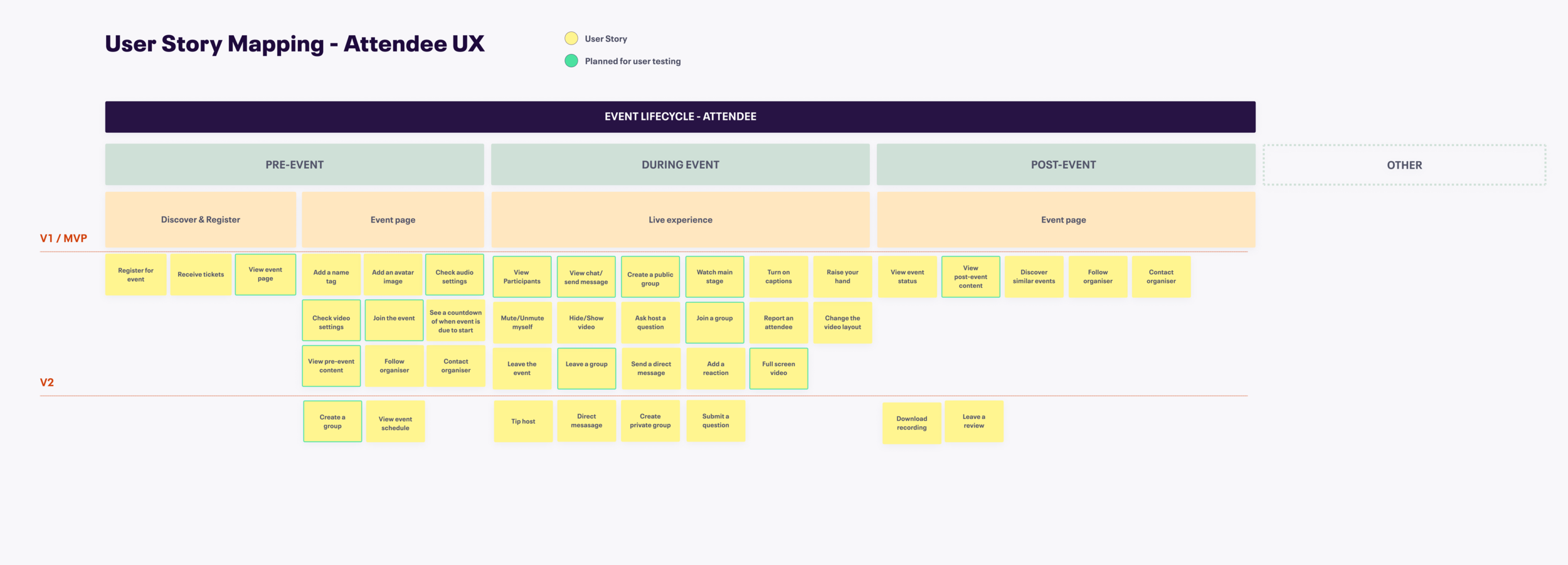
User story mapping helped me map out different user stories into where they exist in the flow, the information architecture and also what stage they are planning to be released.
User flows and hi-fidelity screens
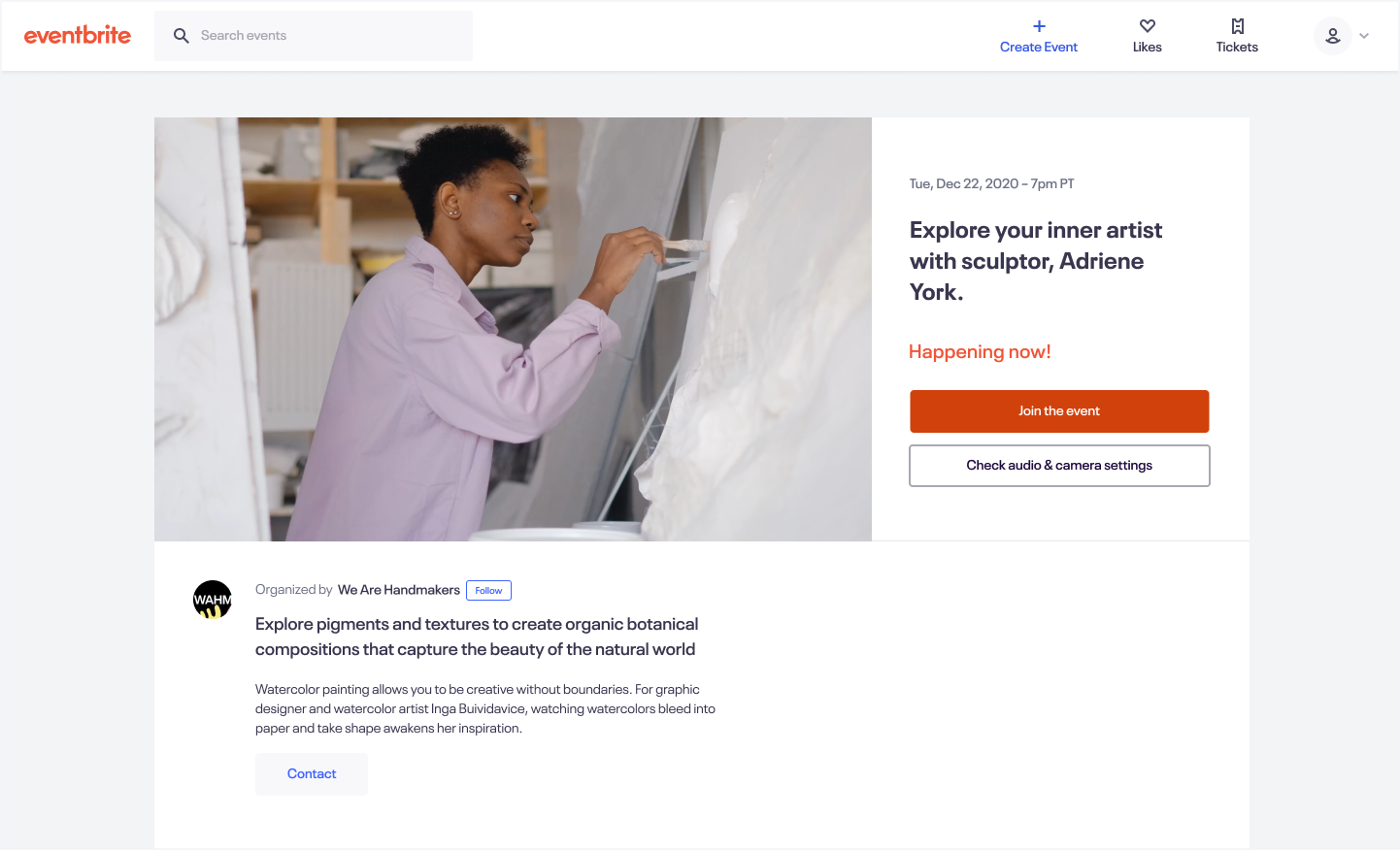
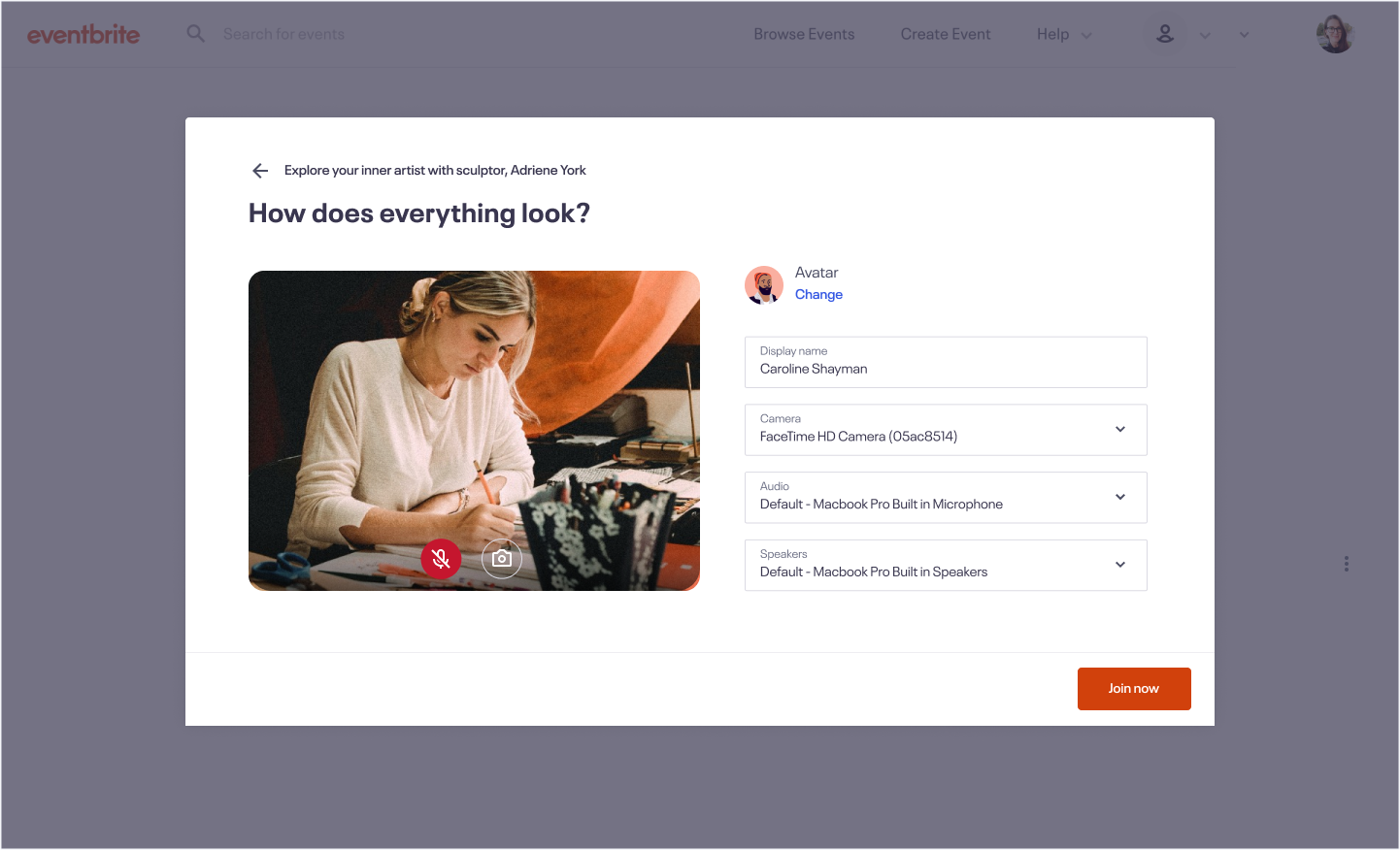
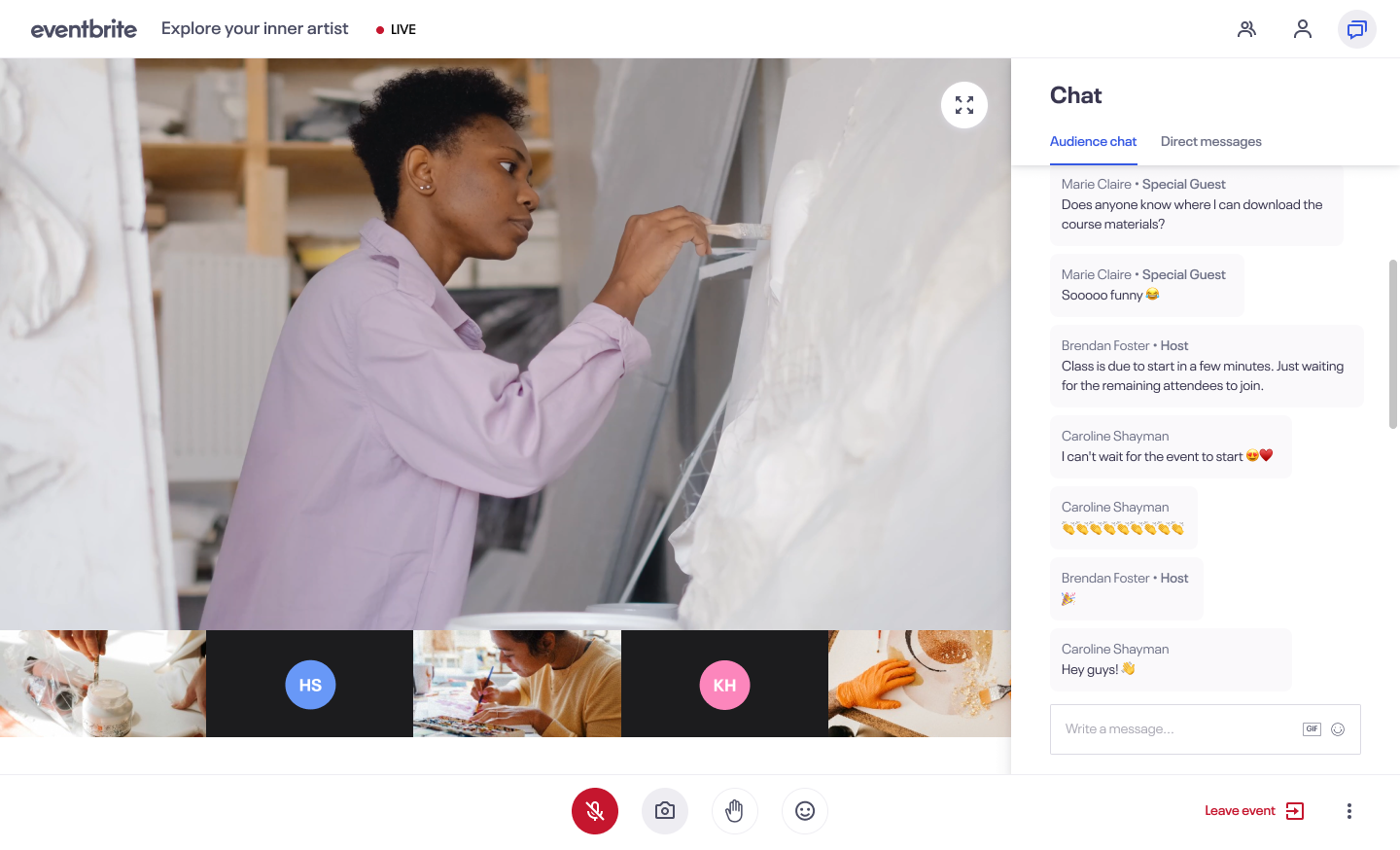
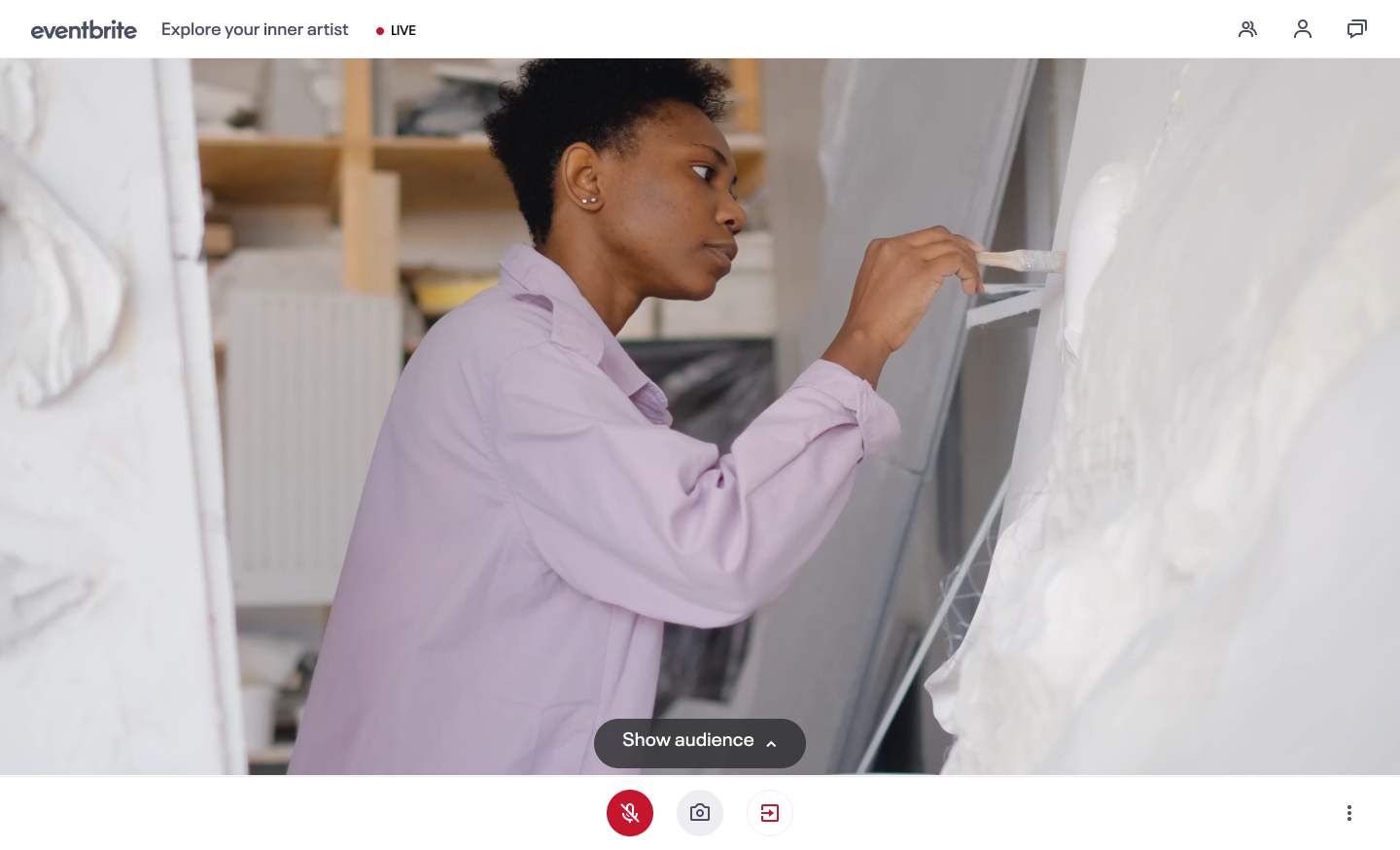
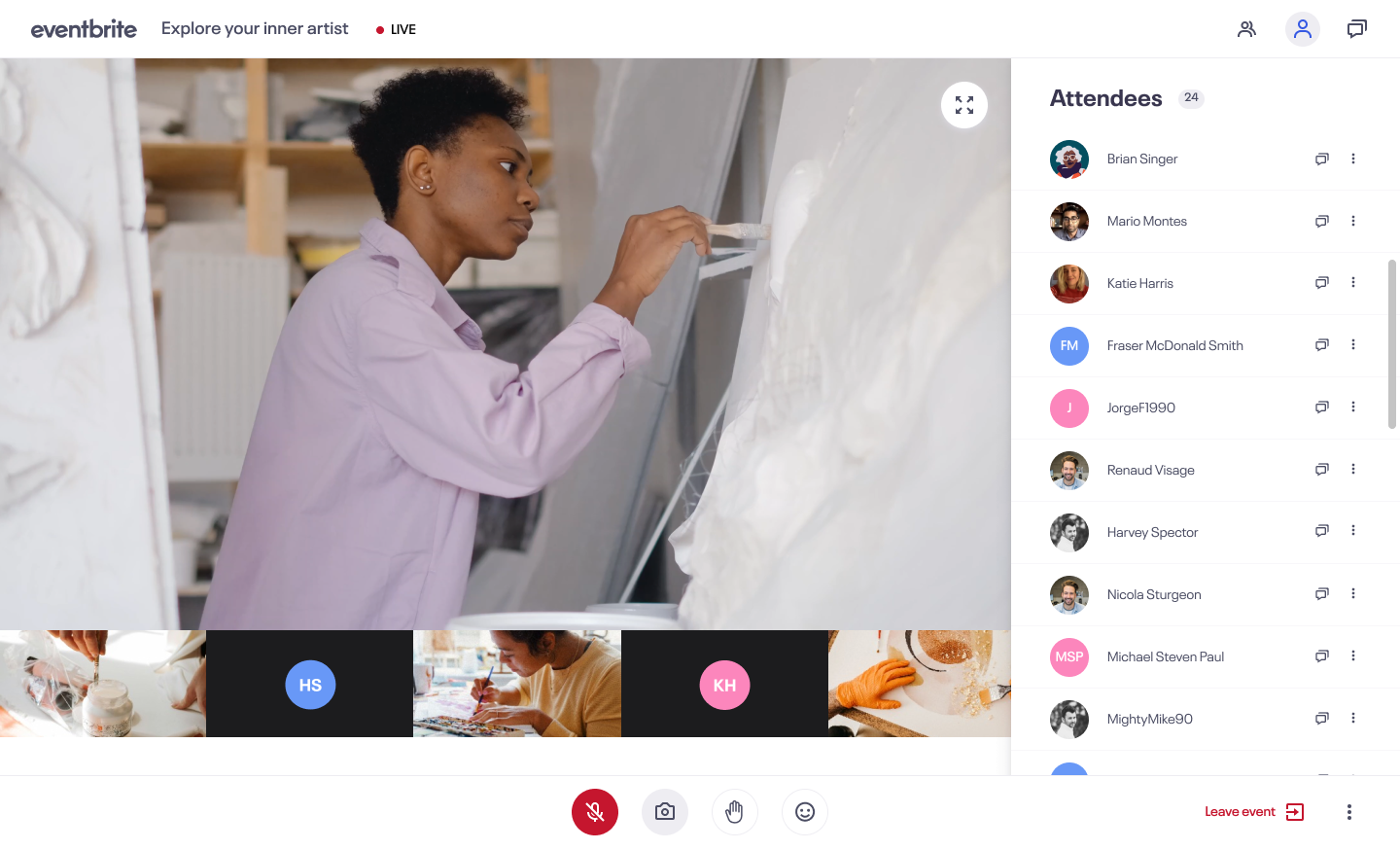
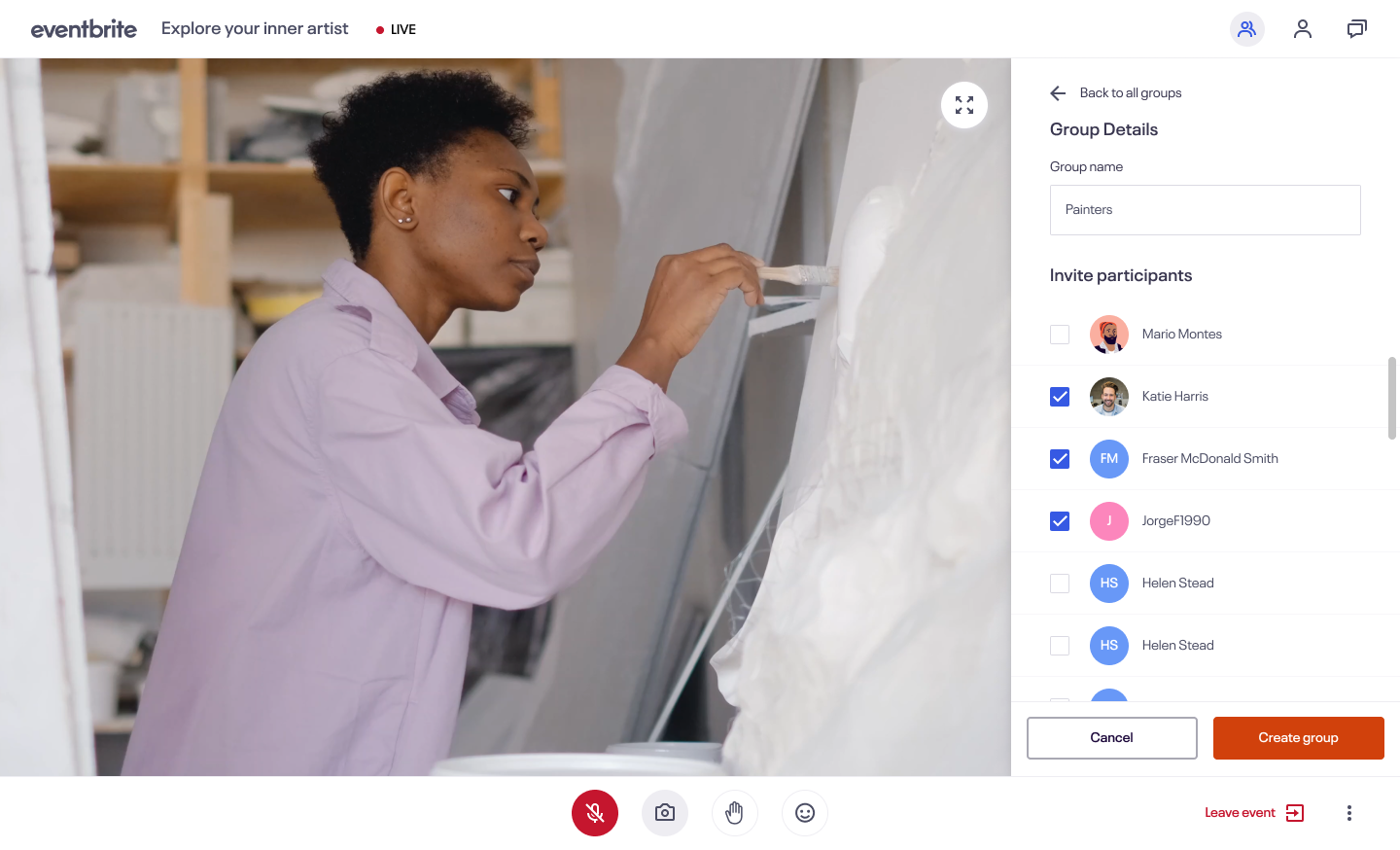
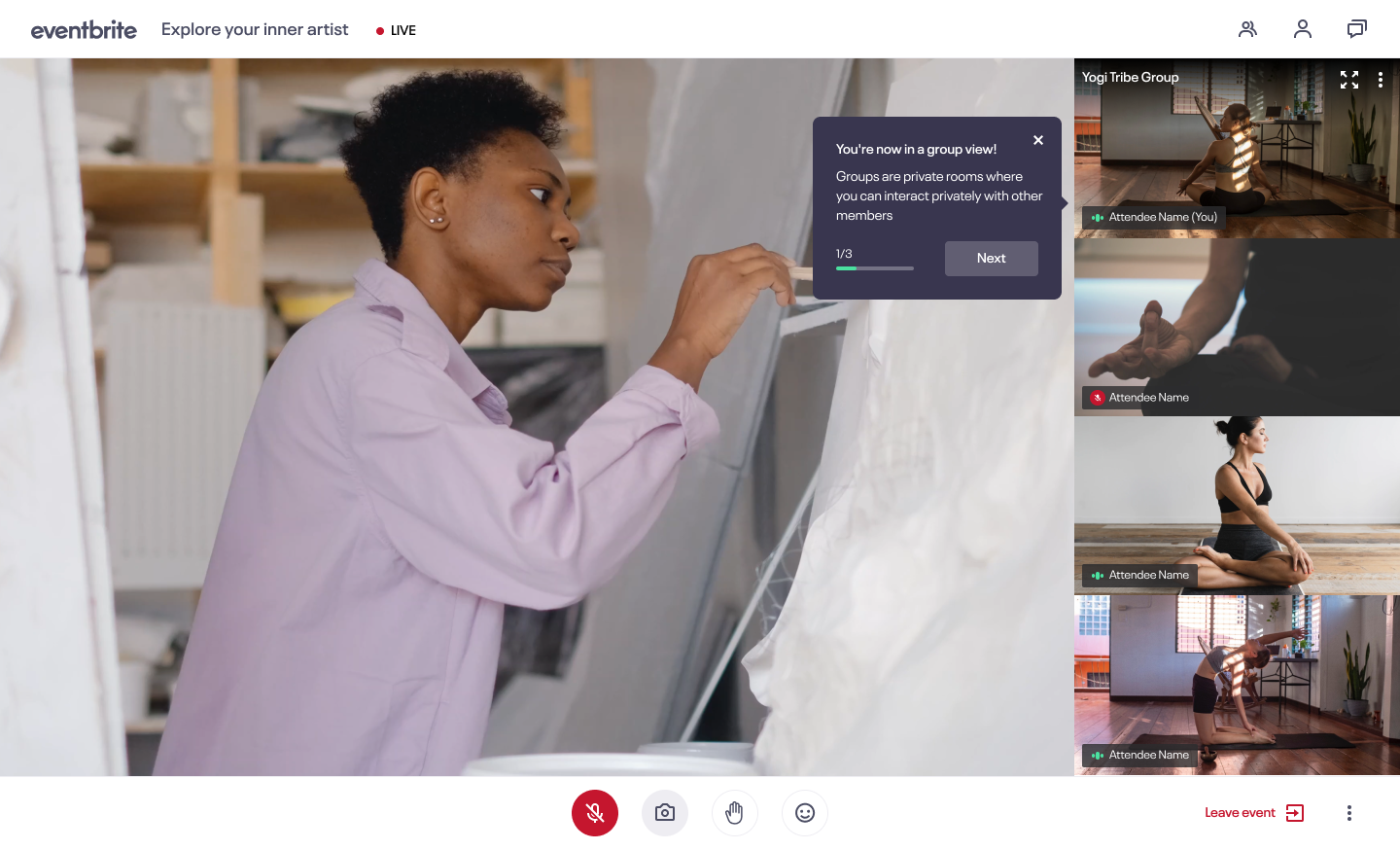
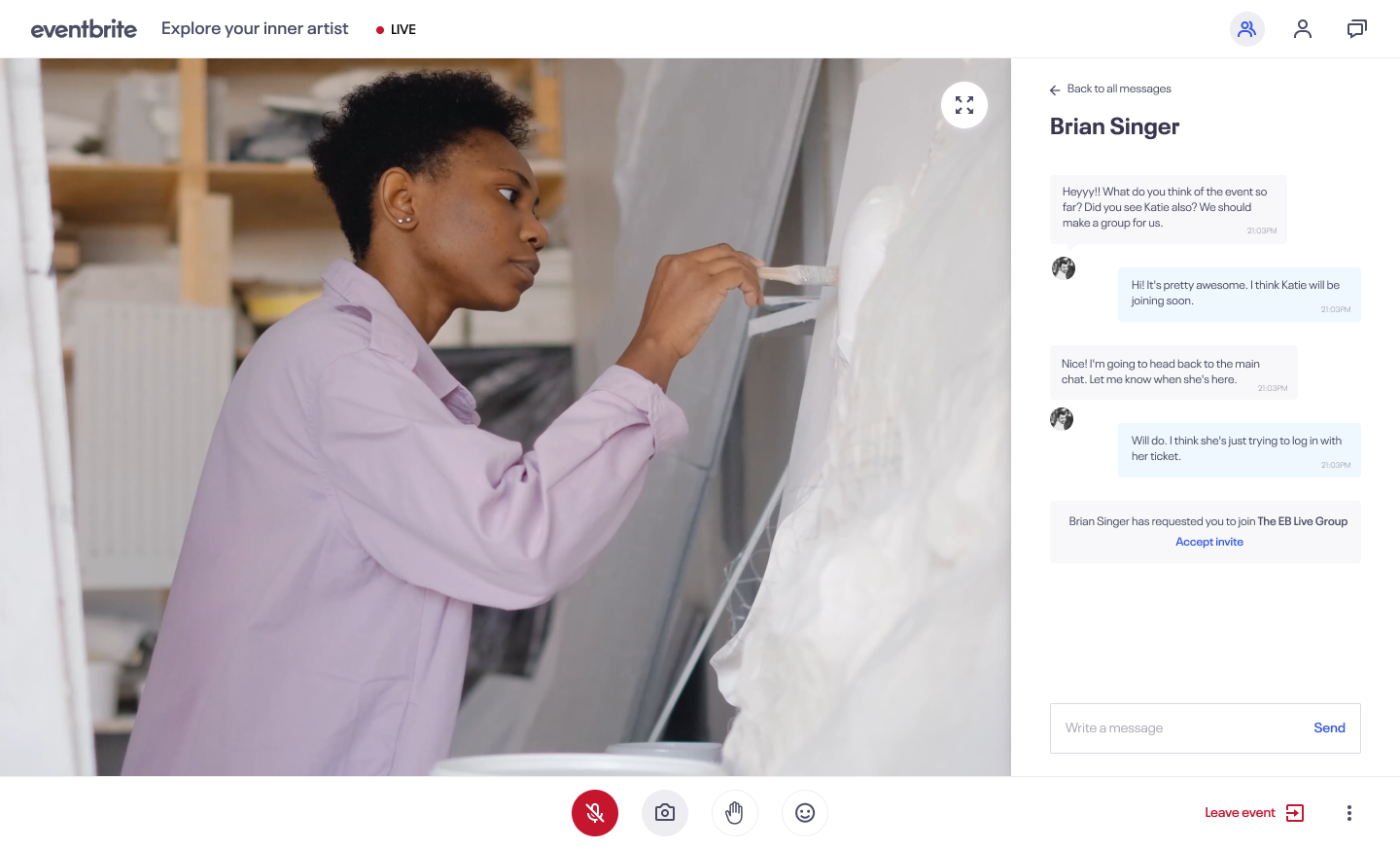
Designing the creator event experience
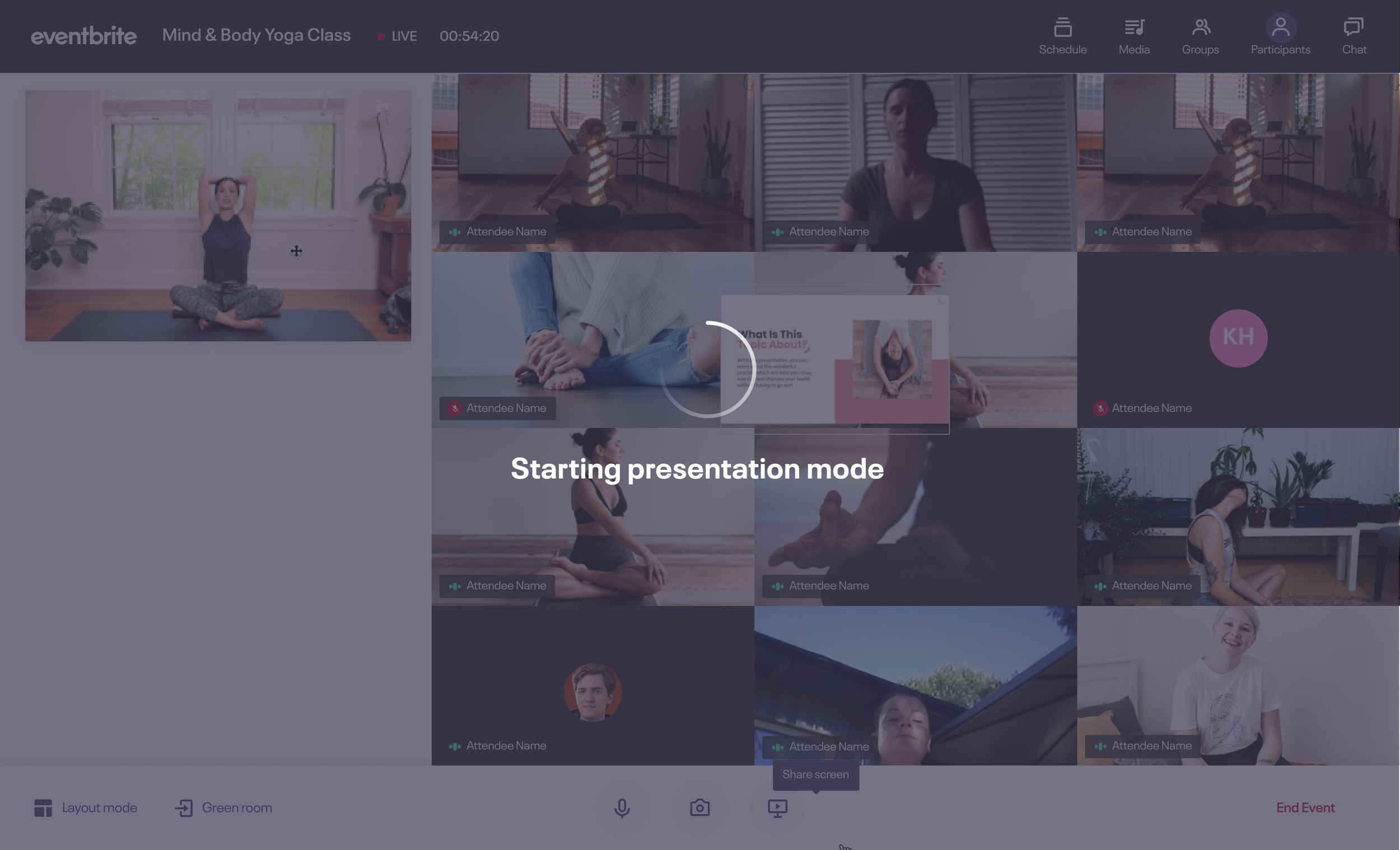
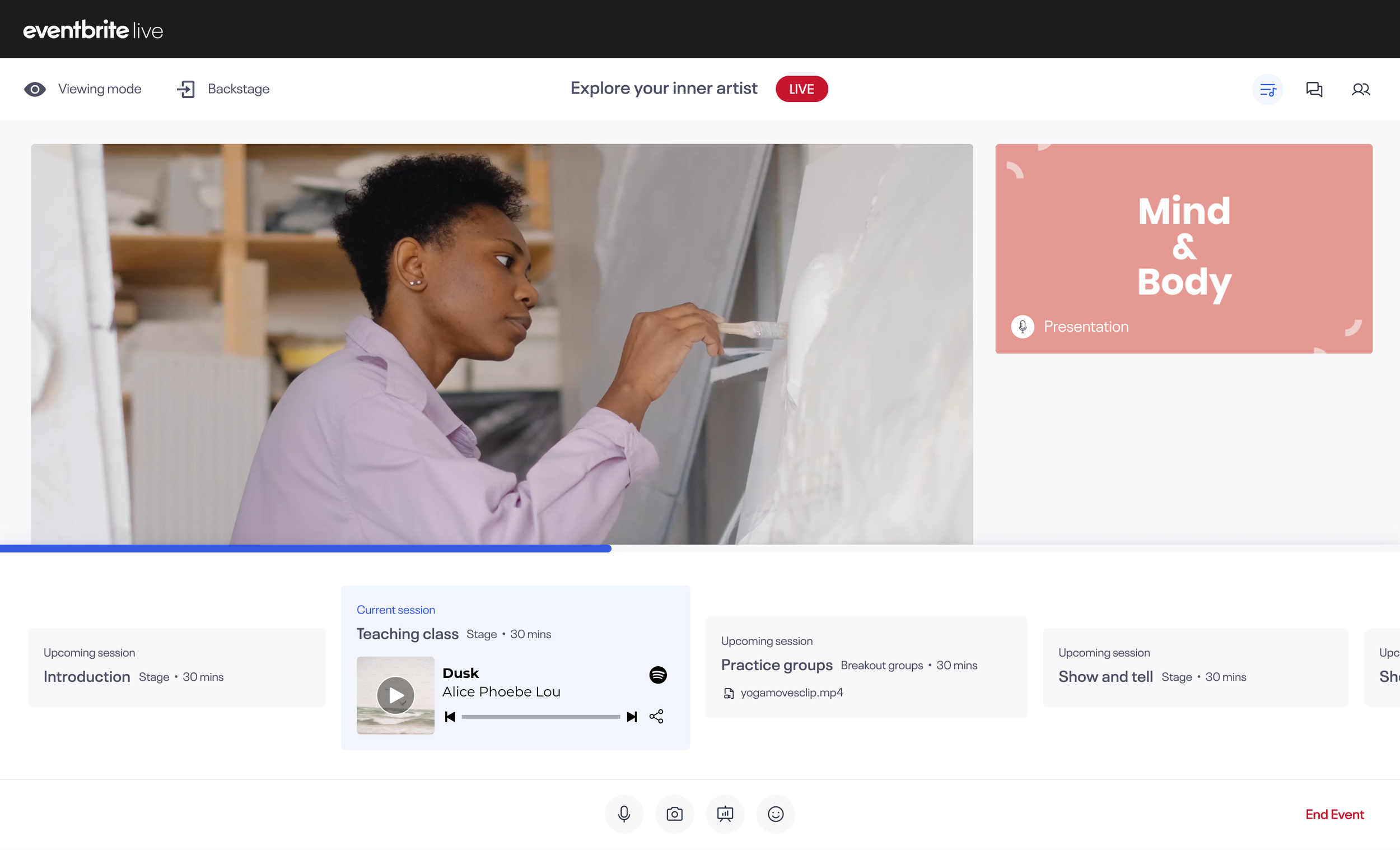
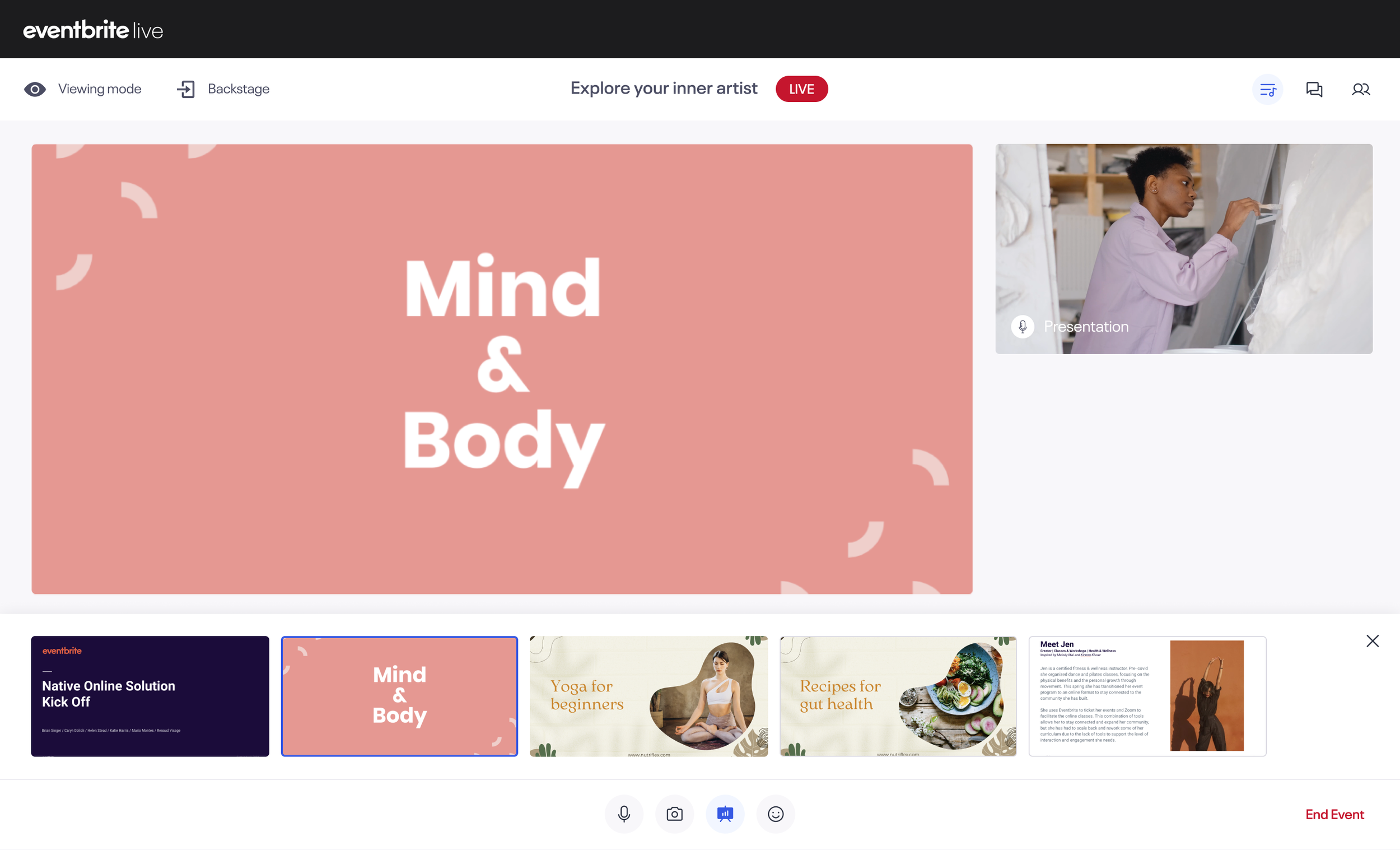
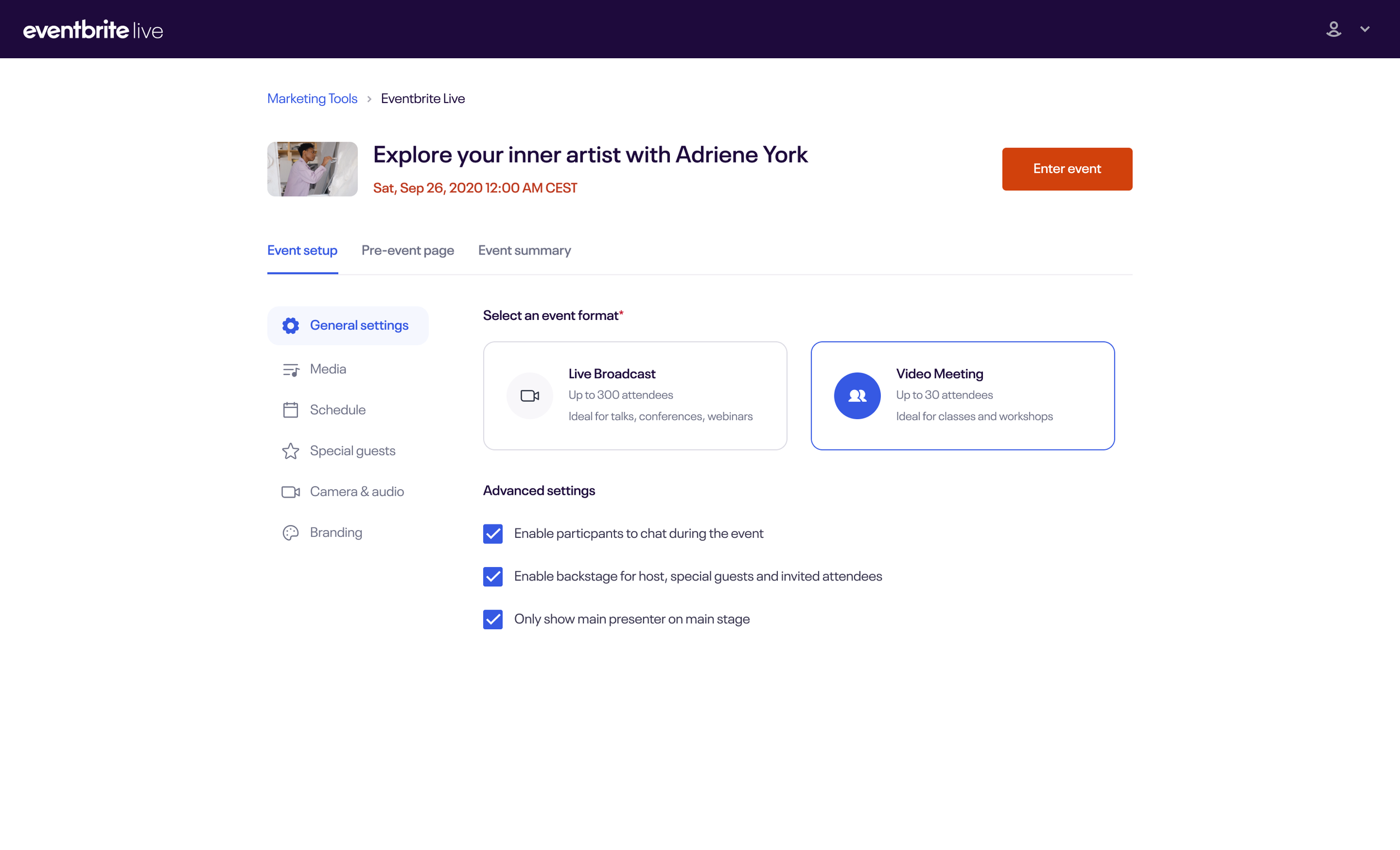
As a team, we decided to keep the creator experience fairly similar to the attendee UX to help reduce the implementation time. We would reuse existing components and only create new ones when it was a unique feature for the creator.




Design & Engineering Hack Day
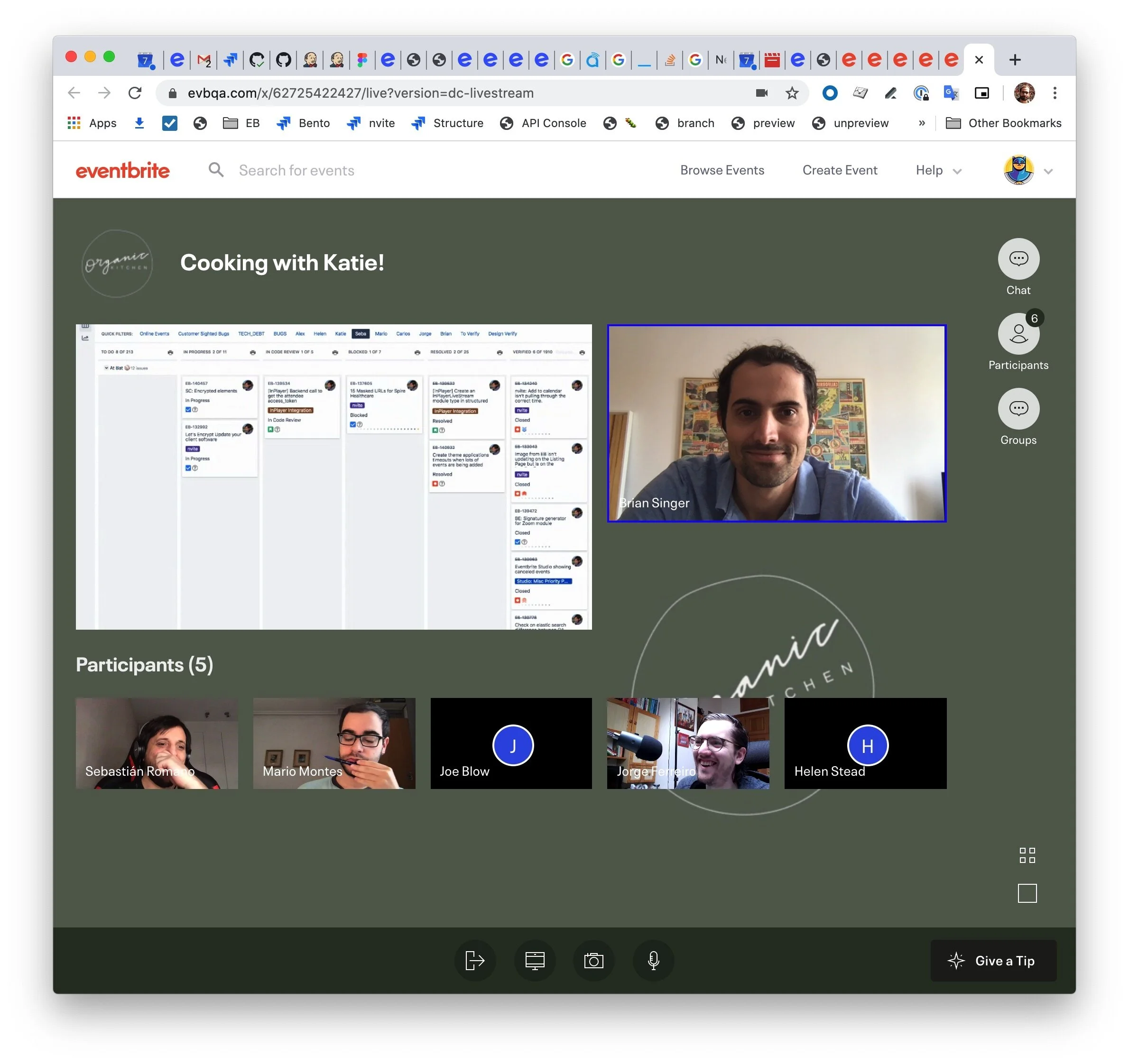
Due to an extremely limited timeframe, we spent 2 days doing a team wide 'hack day'.
As the product designer for the team, I spent the two days quickly putting together hi-fidelity screens while the engineers worked on implementing it with a third-party tool.
Remote usability testing
To help validate some of our ideas, we blended moderated user interviews with event creators, and unmoderated testing on usertesting.com. This helped inform the design strategy and plan for future iterations. To do this, I created a test plan and built an end to end prototype of the attendee experience using task based analysis to see how intuitive the experience was.
Conclusion
This has been an interesting project for me to work on because I was able to be involved in the product strategy and design a brand new experience for Eventbrite in a new market. There is still a lot of work to do to bring it to market and the next steps will be to test it with a small sample of beta users and design the next iteration cycles.