
Relationships, agile teams and retrospectives.

There are many similarities between relationships and product teams. On the surface, relationships seem like they are driven by love, passion and a mutual respect for one another. Product teams on the other hand are strangers with individual skill sets that are brought together to deliver value towards a larger business goal. In the best case scenario the people within the team share a common passion and have a mutual respect for the individual members, but they have to learn how to work well together and optimise working relationships for the greater success of the company.
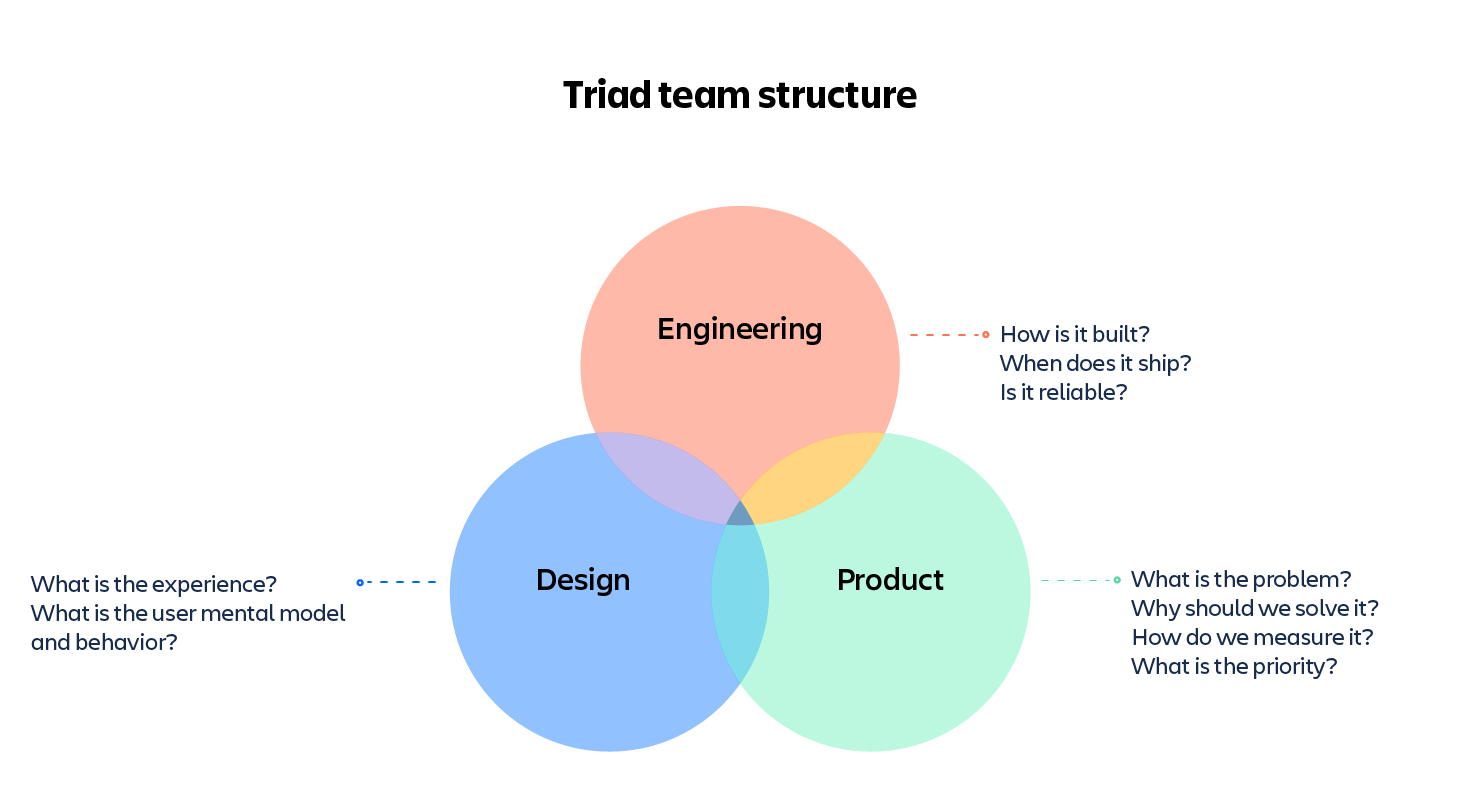
For those that are not familiar with how a typical software product team operates, it is usually made up of a group of engineers, a product manager and a designer. Each function has different (and often competing) needs, priorities and objectives and on top of that each individual also brings their own personality, working style and preferences to the table as well. The product manager is typically advocating on behalf of the business and is focused on what will drive impact to the company's bottom line. The product designer might be more focused on the end user and how to provide a delightful product experience. The engineers care deeply about how the product is made; that it is scalable, reliable and built in a way that is efficient and cost effective. Despite all working towards a common goal: delivering value to the business and to the customer, there are many nuances that often lead to competing priorities and demands.
To manage all of these conflicts and ensure that projects are delivered to a quality standard, on time and in a cost efficient way, product teams often rely on ‘agile’ methodology, and comply with rituals that happen across a 2 week ‘sprint’. One of the rituals I want to focus on is called a ‘retrospective’. There’s many ways a retrospective can be run, but typically all members of the team gather together at the end of the 2 week sprint and discuss what worked well, what could be improved and give team appraisals. Another format is ‘mad, glad, sad’: what made us mad that week, sad that week, and glad that week. Regardless of what format is chosen, the end goal is to have a better understanding of the team's needs and what could be improved for the next sprint so that each member feels happier and can work better together.
What happens in these meetings always fascinates me. Each member has had their own experiences during the sprint, and gathering together and discussing how it went for each of us brings clarity to the group and we all leave with alignment and a clear plan of action of what needs to change and how we can work together to improve our work. As we do this as a continued ritual for months and sometimes years, the relationships only improve, our work becomes easier and we understand each other much better.
Let’s break down how a retrospective is conducted and how we can apply some of these methods to our romantic relationships.
First a dedicated time is set in our calendars every 2 weeks. All members of the team should join, and it can last anywhere from 45 minutes to 2 hours depending on the team size. One member facilitates the meeting and we all have 15-20 minutes to sit in silence and add sticky notes to a collaborative online whiteboard (Miro.com, Retroboard.com etc.). There are 3 columns to add sticky notes to: ‘What went well’, ‘What could be improved’ and ‘Shoutouts’. After every one has completed their notes, we take it in turns to go around the group and share our feedback. Once everyone has contributed their thoughts, we group any common themes and then have a few minutes to vote on the topics that are most important to us. This part is important as it encourages the team to focus on the most pressing topics, and by timeboxing ourselves to spend only 5-10 minutes on each topic we don’t get too ‘in the weeds’.
By the end of the session, we are left with a list of action items which are assigned to the relevant team members and which we will follow up on in the next retro. An example might be ‘improve team communication’. After a few minutes of discussion we might discover that some members of the team prefer to have meetings earlier in the day, so they can spend the afternoon on focused tasks. If we all agree, an action item could be for someone to reschedule the afternoon calls to earlier in the day. Sometimes these changes are just temporary, and we can follow up in the next retro to see how it impacted things in the next sprint.

Template from https://retrotool.io/
Now imagine if we applied a similar methodology to our romantic lives. Imagine if there was an opportunity every week or month we could sit with our partners and discuss what’s working well, what could be improved and what praise and appreciation we have for the other person. Rather than circular disagreements with no plan or outcome, imagine we could make a clear list of action items for each party to follow up on. The resentment that builds up from a lack of communication could be greatly lessened if we took the time to sit down and have a clear plan for solving issues.
In product teams, individual members are greatly encouraged to work well together because they share common goals and have a much better chance of shared success if the working relationships are harmonious and utilise the best of each individual's skill set.